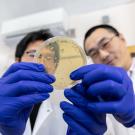
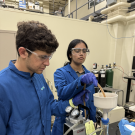
UC Davis researchers are partnering with Mango Materials to make sustainable plastics derived from waste methane more affordable, combining university research, industrial-scale biomanufacturing and workforce training to advance the growing industry.
The Minnesota marshes Matthew Maciosek explored as a child are threatened by agricultural groundwater use. Now a UC Davis biological systems engineering student, he's researching sustainable irrigation practices in California's Central Valley to help protect wetlands for future generations.
Fungi and yeast as architects for cultured meat? Ph.D. candidate Begum Koysuren engineers living scaffolds that allow cells to attach, grow and organize naturally. Her work could transform how we produce sustainable food — by letting nature do what it does best.
Between her biological systems engineering research and her job as assistant grower at Gotham Greens, aka her “living lab,” master's student Grace Algeo is focused on developing practical tools that support growers, strengthen sustainability efforts and point toward a more resilient future for agriculture.
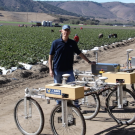
UC Davis will soon open the Lynda and Stewart Resnick Center for Agricultural Innovation, where Fadi Fathallah, professor and chair of biological and agricultural engineering, is leading robotics research to develop practical, field-ready technologies that improve efficiency, sustainability and resilience in modern agriculture.
Research led by UC Davis Professor of Biological and Agricultural Engineering Isaya Kisekka is using real-time data and smarter irrigation strategies to keep farms productive while safeguarding California’s long-term agricultural resilience.
The U.S. Department of Energy’s Advanced Research Projects Agency-Energy (ARPA‑E) awarded UC Davis researchers a $3 million grant to develop a bio‑based process that selectively captures rare earth elements from acidic mine‑influenced and industrial wastewater streams. The project is led by Yi Wang, an assistant professor in the Department of Biological and Agricultural Engineering.
As California's agricultural sector adopts automation to manage costs, labor shortages and production risks, researchers at UC Davis are partnering with them to develop solutions that can make a real difference in the field.
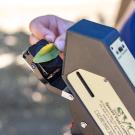
With a quick leaf scan, the AI-powered Leaf Monitor delivers real-time nutrient insights for crops. By replacing weeks-long lab tests, the new tool, developed by UC Davis engineers, can help farmers boost yields, cut fertilizer waste and manage fields with precision and sustainability.
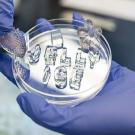
Presented at the American Chemical Society’s Fall 2025 meeting, jelly ice is a reusable, compostable cooling material made from gelatin that stays solid without meltwater. Developed by UC Davis engineers, it offers sustainable potential for food, medicine and biotech applications.
by Alireza Pourreza, Assistant Professor of Cooperative Extension for the Department of Biological and Agricultural Engineering, and Kristin Singhasemanon, AIFS Communications and Marketing
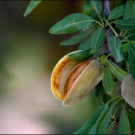
Researchers at UC Davis are using drone imagery and advanced modeling to track nitrogen levels in almond orchards — a step toward more efficient farming. This approach could help growers optimize fertilizer use, protect water quality and improve sustainability in California agriculture.
This summer, a multidisciplinary group of undergraduate students participated in a biomanufactured foods research challenge. Now, they are taking their project — turning agricultural waste into food using fungi — to Washington, D.C.
A new chatbot developed by UC Davis researchers will help the public and industry identify, manage and treat weeds thanks to a robust set of training data, including papers, books and journals on invasive plants.
Assistant Professor Yi Wang is part of a new NSF-funded engineering research center using biomanufacturing as a means to shift the manufacturing industry toward zero or negative emissions by converting carbon dioxide into environmentally friendly chemicals and products.
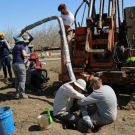
Extreme weather spurred by climate change, including droughts and heavy rains, may increase the risk of nitrates from fertilizers ending up in groundwater, according to a recent study from researchers at the University of California, Davis. The study found heavy rains after a drought caused nitrates to seep 33 feet under farm fields in as little as 10 days.