Mycelium, the white filament-like root structure of mushrooms, might be an important building block of a more sustainable world. By growing mycelium with a biomass—anything from coffee grounds to leftover agricultural waste—researchers at UC Davis are creating sustainable structures that can be turned into everything from biodegradable plastics and circuit boards to filters that remove harmful antibiotic and pesticide residues from water.
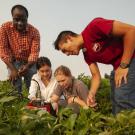
The UC Davis Digital Agriculture Laboratory sits at the intersection of agriculture and digital technology. Led by biological and agricultural engineering assistant professor Alireza Pourreza, the lab works directly with growers to develop and deploy technology that gives them the information they need to better understand their plants and navigate our changing climate.
A multidisciplinary team of researchers, including Professor Gang Sun, received a $1.8 million grant to improve the design, function and safety of personal protective equipment, or PPE, for health care workers.
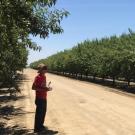
Researchers from the University of California, Davis, have been awarded a $10 million grant by the U.S. Department of Agriculture’s National Institute of Food and Agriculture to find ways to sustain irrigated agriculture while improving groundwater quantity and quality in the Southwest under a changing climate.
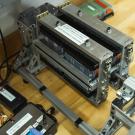
UC Davis engineers have invented shaking and inversion machines that are a critical part of the UC Davis Genome Center’s award-winning asymptomatic COVID-19 testing. These machines, designed and built in just six weeks, help treat saliva samples so they can be tested for the virus.
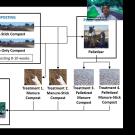
On March 18, the UC Davis Healthy Soils Project hosted a virtual field day focused on producing and applying compost products from almond and dairy waste. The virtual field day is an opportunity for UC Davis faculty and students to connect and share their research with agricultural producers across California.
Researchers in the department of Biological and Agricultural Engineering (BAE) are working to make agriculture safer for children. With a new five-year project funded through the National Children’s Center for Rural and Agricultural Health and Safety (NCCRAHS), assistant cooperative extension specialist Farzaneh Khorsandi and professor Fadi Fathallah will study all-terrain vehicle (ATV) safety to prevent childhood injury.
Biological and agricultural engineering associate professor Stavros Vougioukas is leading two new research projects to mechanize the orchard and pick fruit more effectively.
As the world’s population is expected to reach 9–10 billion by 2050 according to the U.N., the world must double food production to meet demand while using and reusing the resources we have left in a sustainable manner. Ruihong Zhang and Isaya Kisekka at UC Davis are rising to meet the challenge by finding new ways to sustainably produce food, while conserving resources by using microbes to produce new sources of protein and managing and irrigating crops with pinpoint precision.
A 2019 paper from the UC Davis Biological and Agricultural Engineering Department recently received the European Society of Agricultural Engineers (EurAgEng) Outstanding Paper Award. The award is given every other year by the Institution of Agricultural Engineers (IAgrE) to two to three standout papers published in the Biosystems Engineering journal.
Though many restaurants and markets pride themselves on serving “farm to fork” food, what happens between those steps is one of the most important part of the food production process. With improper handling and storage, food can start to rot or grow mold, which makes it unusable and unsafe for consumers.
Vivian Vuong’s ’17, Ph.D. ’21, drive to study agricultural engineering stemmed from her undergraduate research with Biological and Agricultural Engineering Professor and Smart Farm Big Idea Champion David Slaughter. Today she’s working on gathering genetic data on plants to increase yield in the field – a method that can improve food access and the environment.
The University of California, Davis, has been awarded $20 million as part of a multi-institutional collaboration to establish an institute focused on enabling the next-generation food system through the integration of artificial intelligence, or AI, technologies. The award is part of a larger investment announced today (Aug. 26) by the National Science Foundation, or NSF, in partnership with several federal agencies — distributing a total of $140 million to fund seven complementary AI research institutes across the nation.
A new startup out of the UC Davis biological and agricultural engineering (BAE) department has developed an award-winning system that uses insect larvae to produce animal feed with less land and a smaller carbon footprint. Fresh off success in UC Berkeley’s 2020 Big Ideas competition and UC Davis’ 2019 Big Bang! Business Competition, BioMilitus is poised to use their lab-based research to make the planet more sustainable.
Professor David Slaughter was featured in the article discussing the changes ahead for agriculture as the workers will move from manual labor to digital labor.
Read the article, titled "Where Will We Find Tech-Savvy Farm Workers?" at GrowingProduce.com.